7 Proven Restful Routines for Busy Families With Babies and Toddlers
Bedtime shouldn’t feel like a hostage negotiation. Yet for millions of parents, it does—complete with tears, stalling tactics, and the dreaded 4 a.m. curtain call. Research published in Sleep Medicine Reviews (2021) found that families with consistent bedtime routines reported longer night stretches and fewer awakenings. The fix isn’t a rigid military schedule. It’s a handful of simple, repeatable restful routines that work with your child’s biology instead of against it.
In this guide, you’ll learn seven practical strategies that fit real family life and support healthy sleep from newborn through preschool.
Why Restful Routines Matter for Young Children
Young children are still building the internal “clocks” that help them tell day from night. In early infancy, sleep scatters across 24 hours. By 6–12 weeks, circadian signals begin to emerge and night sleep gradually consolidates.
Morning light and predictable daily cues—feeding, play, wind-down steps—help synchronize that clock. Consistency reduces guesswork for little bodies and brains, leading to easier bedtimes and steadier naps.
Key takeaway: Babies aren’t “bad sleepers”—their sleep is developing. Your job is to provide reliable cues that make sleep predictable.
The Sleep Science Behind Restful Routines (In Plain Language)
Think of sleep as a team effort between two systems and your environment:
- Sleep drive works like a pressure gauge. The longer your child stays awake, the more pressure builds. Naps and bedtime release that pressure.
- Circadian rhythm is the body’s 24-hour clock, guided by light. Morning brightness pulls sleep earlier; evening brightness pushes it later.
- Environment and routines either support or fight those systems.
What this means for you:
- Light timing is powerful. Bright morning light anchors wake-up time, while dim evening light supports natural melatonin release, according to the CDC’s circadian health resources.
- Consistent bedtime routines work. A 2021 meta-analysis in Sleep Medicine Reviews linked regular pre-bed sequences with longer total sleep, fewer night wakings, and more predictable nights.
- Age-appropriate totals keep expectations realistic. The American Academy of Sleep Medicine (endorsed by the AAP) recommends 12–16 hours for 4–12 months, 11–14 hours for 1–2 years, and 10–13 hours for 3–5 years, including naps.
7 Strategies for Building Truly Restful Routines
1. Anchor Wake Time and Bedtime First
Aim for a stable morning wake time and a bedtime that fits your child’s age and last nap. Even a 20–30 minute swing is fine, but big shifts—especially on weekends—can unsettle the body clock and make Monday feel rough for everyone.
Why it works: Morning light pulls the circadian clock earlier, and evening light pushes it later. Anchoring these two endpoints helps night sleep consolidate faster.
Example:
- Before: Wake time floats between 6:00–8:00 a.m.; bedtime anywhere from 7:00–9:00 p.m.
- After: Wake time 6:45–7:15 a.m.; bedtime 7:15–7:45 p.m., adjusted slightly by last nap.
2. Build a 20–40 Minute Bedtime Routine and Repeat It
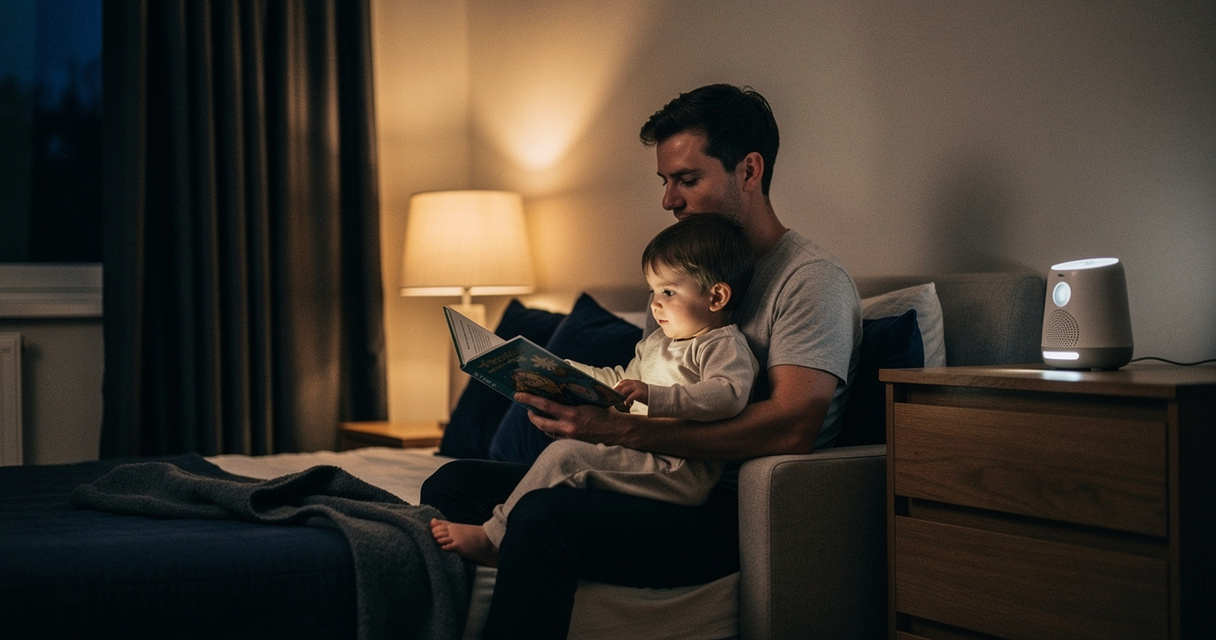
Keep the same simple order most nights: bath, pajamas, feeding, brush teeth (for older babies and toddlers), two books, lights down, cuddle, bed. A 2021 review in Sleep Medicine Reviews found that predictable sequences become powerful sleep cues, improving both infant sleep and parent mood.
Why it works: When your child’s brain recognizes the same steps in the same order, it begins winding down before you even turn off the light.
Example:
- Before: Random steps in varied order; sometimes TV during wind-down.
- After: Same 30-minute routine every night; no screens in the hour before bed.
3. Dim Evening Light, Protect Morning Light
Lower household lighting 60 minutes before bedtime and keep the bedroom cozy and dark for night sleep. In the morning, open blinds and step outside for a few minutes of daylight.
Why it works: Dimming light supports natural melatonin release and reduces circadian delay. Bright morning light resets the clock so your child feels sleepy at the right time that evening.
Example:
- Before: Overhead LEDs blazing until bedtime; tablet use in bed.
- After: Warm, dim lamps after dinner; no screens before bed; quick morning sunlight by the window or on the porch.
4. Use Age-Appropriate Sleep Totals—Not the Internet’s “Perfect” Schedule
Instead of chasing exact nap lengths, think in 24-hour totals. For most babies 4–12 months, the AASM recommends 12–16 hours across day and night. Toddlers 1–2 years need 11–14 hours. Preschoolers 3–5 years need 10–13 hours, naps included.
Why it works: Focusing on realistic totals prevents overtiredness without obsessing over every nap minute. Your child may land anywhere within the range and still thrive.
Example:
- Before: Expecting a 6-month-old to take three 2-hour naps every day.
- After: Aiming for roughly 14 hours total in 24 hours, with flexible nap lengths.
5. Use Wake Windows as a Guide—Not a Rulebook
Wake windows are practical ranges between sleeps that help balance sleep pressure. Younger babies need shorter awake times; toddlers handle longer stretches. Use a calculator to estimate a range, then adjust based on your child’s sleepy cues and overnight rest.
Why it works: Calibrated awake times build enough sleep drive for easier settling without tipping into overtiredness. The AAP also recommends pairing healthy nap timing with safe-sleep practices—own flat, firm surface and room-sharing without bed-sharing in the first year.
Example:
- Before: Putting a 5-month-old down every two hours on the dot, ignoring day-to-day variation.
- After: Using a range (roughly 2–3 hours) and watching your baby’s cues; flexing after rough nights.
6. Keep Screens Out of the Wind-Down Zone
For children under 18 months, the AAP recommends avoiding screen media except video chat. For ages 2–5, limit to about one hour a day of high-quality content. Keep bedrooms and the hour before bed screen-free.
Why it works: Screens displace calming rituals, and bright blue-rich light can delay melatonin, making it harder for little ones to fall asleep.
Example:
- Before: Cartoons running until lights out; tablet in bed.
- After: Family media plan in place; all devices parked outside bedrooms before wind-down begins.
7. Design a Sleep-Friendly Environment That’s Predictable and Safe
Cool (mid-60s °F if possible), quiet, and dark supports deeper sleep. Use white noise at a safe distance and moderate volume if household sounds are an issue. For infants, follow AAP safe-sleep guidance: firm, flat surface; no soft bedding or positioners; room-share without bed-sharing for at least the first six months.
Why it works: A steady environment removes barriers to sleep consolidation and reduces risks tied to unsafe sleep surfaces, according to the AAP’s 2022 updated safe-sleep recommendations.
Example:
- Before: Bright nightlights, irregular room temperature, swing naps.
- After: Darkened room, steady cool temperature, independent sleep on a firm, flat surface.
A Real-Life Restful Routine Builder for Busy Days
When time is tight, try this ultra-simple, repeatable flow:
- Morning anchor: Open shades, say “good morning,” spend 5 minutes near daylight.
- Nap rhythm: Aim for roughly consistent nap windows rather than exact minutes.
- Pre-bed buffer: Stop screens and dim lights 60 minutes before bedtime.
- Short, sweet routine: Bath or wipe-down → PJs → feed → brush teeth (if age-appropriate) → two books → cuddle → bed.
- Weekend sanity: Keep wake time within 30 minutes of weekdays.
Tip: If bedtime resistance appears, shift bedtime 15 minutes earlier for 3–4 nights. Many toddlers are simply overtired, and that small shift can make a big difference.
Frequently Asked Questions
Q: How much total sleep should my child get in 24 hours?
The American Academy of Sleep Medicine (endorsed by the AAP) recommends 12–16 hours for ages 4–12 months, 11–14 hours for 1–2 years, and 10–13 hours for 3–5 years, including naps. Expect individual variation within these ranges—your child may be perfectly healthy at the higher or lower end.
Q: Our schedule changes some days. Will routines still help?
Absolutely. Aim for “mostly consistent” rather than perfect. Protect morning light exposure and your core bedtime routine. Even with variable days, repeating the same wind-down sequence and keeping wake and bedtime within about 30 minutes provides strong sleep cues.
Q: Do screens really affect toddler sleep?
They can. The AAP recommends no screen media for children under 18 months (except video chat) and keeping devices out of bedrooms and the pre-bed hour. Bright, blue-rich light can delay melatonin production and make it harder to fall asleep.
Q: What’s the safest sleep setup while we build routines?
Use a firm, flat sleep surface in your room (not your bed) for at least the first six months, ideally up to a year. Keep the sleep area free of soft objects and loose bedding. These AAP-aligned steps reduce the risk of sleep-related infant deaths as routines take shape.
Q: My 6–12 week-old has day-night confusion. Any routine tips?
Offer bright daylight after morning wake-ups, keep nighttime feeds and diaper changes low-light and low-stimulation, and begin a very short, gentle wind-down before naps and bedtime. Circadian signals start emerging around 6–12 weeks, so your environmental cues genuinely help the process along.
Build Restful Routines That Last
You don’t need a perfect schedule—just consistent, restful routines that respect your child’s biology. Anchor wake and bedtime, dim evening light, repeat a short wind-down, protect safe sleep, and use age-appropriate totals as your north star.
When you want quick guidance on timing those awake stretches and naps, try TinyRests to find age-appropriate wake windows and nap schedules for your child.
Medical Disclaimer: This article is for informational purposes only and does not constitute medical advice. Always consult with your pediatrician or healthcare provider about your child’s sleep patterns and any concerns about their development or health.