How to Create a Bedtime Routine That Works (Backed by Science)
Bedtime doesn’t have to feel like a nightly battle. Yet for many families, evenings spiral into overtiredness, stalling, and endless wake-ups that leave everyone exhausted.
The good news? A simple, consistent bedtime routine can change everything. A large multi-site study published in the journal Sleep found that regular bedtime routines in young children are linked to faster sleep onset, fewer night wakings, and longer total sleep. You don’t need a complicated plan—just the right steps, in the right order, timed to your child’s age.
Why Bedtime Routines Matter for Babies and Toddlers
Babies aren’t born knowing how to wind down for sleep. Their circadian rhythms develop gradually across the first year, and a predictable routine helps the brain shift from play mode to rest mode.
The American Academy of Sleep Medicine (endorsed by the AAP) recommends 12–16 hours of total daily sleep for infants 4–12 months and 11–14 hours for toddlers 1–2 years, including naps. A steady bedtime routine helps families actually hit those targets.
A routine is less about perfection and more about steady, soothing signals that tell your child’s brain: it’s time to sleep.
The Sleep Science—Made Simple
Think of your child’s sleep like a two-lock door. Both locks need to click open:
- Lock 1 — The body clock (circadian rhythm). Evening light—especially bright or blue-toned light—suppresses melatonin and delays sleepiness. Research published in Physiological Reports (2022) shows even moderate evening light can significantly shift a young child’s internal clock. Dimming lights before bed helps that first lock open.
- Lock 2 — Sleep pressure. Adenosine builds in the brain during awake time. Age-appropriate wake windows keep this pressure in the sweet spot—not under-tired, not overtired.
When you layer consistent cues on top—bath, book, song, bed—you reduce arousal and help your child link the routine to sleep. Studies show a clear “dose-response” effect: the more consistent the routine, the better the sleep outcomes for both children and parents.
Build a Bedtime Routine That Works: 7 Proven Steps
Choose 3–6 of these steps and repeat them in the same order every night. Each one includes what to do and why it works.
1. Time It With Age-Appropriate Wake Windows
A routine works best when your child is sleepy but not past the point of overtired. Use your final wake window of the day to anchor bedtime, and keep it consistent within a 30-minute range.
Why it works: Aligning with biological sleep pressure reduces bedtime battles and night wakings.
Example: A 10-month-old wakes from the last nap at 3:30 p.m. With a 3–3.5 hour wake window, bedtime lands around 6:30–7:00 p.m.
2. Dim Lights 60 Minutes Before Sleep
Switch to warm, low lighting and quiet play after dinner. Skip bright overheads and energetic roughhousing.
Why it works: Young children show strong melatonin suppression from evening light—even at surprisingly dim levels, according to research from the University of Colorado Boulder (2022). Softer light helps the brain recognize “biological night.”
3. Power Down Screens at Least 1 Hour Before Bedtime
Keep TVs, tablets, and phones out of the bedroom and off during the wind-down period.
Why it works: The AAP advises turning off screens 60 minutes before bed. Both the stimulating content and the light itself can delay sleep onset.
Before: Last cartoon ends at 7:25 p.m., then a frantic dash to bed.
After: Devices off by 6:45 p.m.; soft music and blocks until bath at 7:00 p.m.
4. Keep a Short, Soothing Sequence (20–40 Minutes)
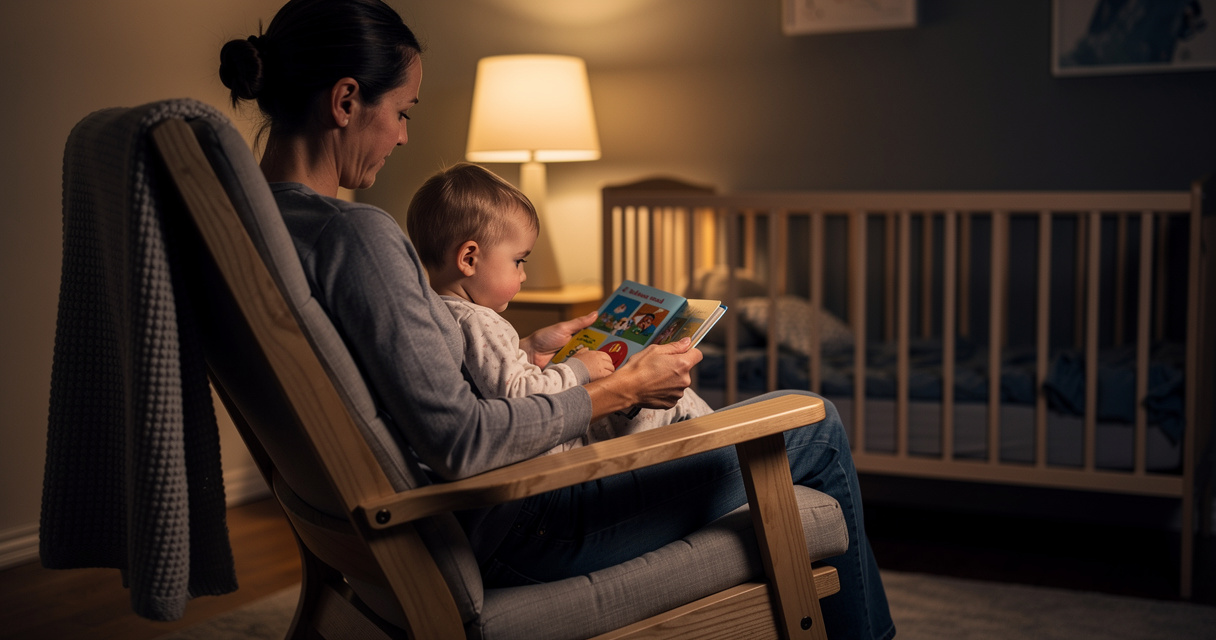
Pick your calming steps and repeat them every night: bath (optional), lotion and pajamas, feed, brush teeth, two short books, lullaby, lights out.
Why it works: The Sleep journal study found that more nights with a consistent routine predicted better sleep duration and fewer night wakings across a large sample of infants and toddlers.
5. Make the Sleep Space Safe and Sleepy
For babies under 12 months, follow safe sleep guidance from the CDC and AAP: firm, flat surface with no pillows, blankets, bumpers, or stuffed toys. Room-share (not bed-share) for at least the first 6 months. Keep the room dark, cool (around 68–72°F), and use white noise if helpful.
Why it works: A safe, boring sleep space removes stimulating cues and reduces risk.
6. Put Baby Down Drowsy, Not Fully Asleep
After the routine, aim to place your baby in the crib slightly awake so they connect falling asleep with their own sleep space.
Why it works: This strengthens independent settling and can reduce signaling for help at minor overnight arousals. Pediatric sleep specialists at Nationwide Children’s Hospital recommend introducing consistent sleep associations gradually from around 2–3 months onward.
If your infant is very young or you’re feeding to sleep—that’s completely fine. Shift this step when you and your baby are ready.
7. Protect the Routine With Daytime Structure
Naps that end too late or a day with too little total sleep can sabotage bedtime. Make sure the last nap doesn’t push too close to your target bedtime.
Why it works: Balanced sleep across 24 hours stabilizes circadian rhythms and reduces evening overtiredness.
Sample Bedtime Routines by Age
Use these as starting points—adapt what fits your family and repeat nightly.
Newborn to 3 Months (Flexible and Feed-Forward)
- Dim lights after sunset
- Swaddle or sleep sack
- Feed
- Gentle rock and lullaby
- Place down when calm
Short, frequent naps and variable bedtimes are normal at this age. Focus on keeping nights darker and quieter than days. The NIH notes newborns typically total 14–17 hours of sleep in 24 hours.
4 to 11 Months (Settling Into Patterns)
- Bath (optional)
- Lotion and pajamas
- Feed
- Brush gums or emerging teeth
- Two short books
- Song
- Crib while drowsy
Expect 12–16 hours total sleep with 2–3 naps. Bedtime often shifts earlier as naps consolidate.
12 to 24 Months (Toddler Routine Power)
- Tidy-up cue (“Let’s put toys to sleep!”)
- Bath
- Pajamas and sleep sack
- Brush teeth
- 1–2 calm books
- Dim lights
- Brief cuddle and closing phrase
- Crib while drowsy
Most toddlers need 11–14 hours total with one midday nap.
Use the same closing words every night. A short, loving phrase like “Night night, I love you” becomes a powerful sleep cue over time.
Troubleshooting Common Bedtime Challenges
Bedtime Keeps Drifting Later
Check the last nap—it may need to start earlier or be shortened. Make sure lights are dimmed and screens are off a full 60 minutes before your target bedtime.
Baby Wakes Often After Midnight
Revisit timing first. A last wake window that stretches too long often causes fragmented overnight sleep. Commit to the same routine for 7–10 consecutive nights before judging results.
Toddler Resists Getting Into the Crib
Offer choices inside firm boundaries: “Blue pajamas or green pajamas?” not “Do you want to go to bed?” Keep the routine short and predictable. A simple visual chart can help older toddlers follow along without power struggles.
Travel or Illness Derailed Everything
Protect the order of your routine steps, even if you shorten everything. Once you’re home and healthy, return to your usual bedtime and sequence for 3–5 nights before evaluating progress.
Frequently Asked Questions
How long should a bedtime routine take?
Aim for 20–40 minutes. Shorter is often better for toddlers who stall—the power comes from consistency and timing, not length. Most families see noticeable improvements after 7–10 steady nights.
Do we have to include a bath every night?
Not at all. Baths can be soothing but aren’t required. Any 3–6 calming steps repeated in the same order will work. Consistency across nights matters more than any single activity.
What about night lights—do they hurt sleep?
A very dim, warm-toned night light for safety is fine. Avoid bright or cool-blue light near bedtime, which can suppress melatonin. A 2018 review in Frontiers in Psychiatry confirmed that blue-spectrum light is particularly disruptive to children’s sleep onset.
The Bottom Line
A bedtime routine that works is simple, calm, and consistent—and it’s timed to your child’s age-appropriate wake window. Start tonight with a few soothing steps, dim the lights, and turn off screens an hour before bed.
Not sure what wake window or nap schedule fits your child’s age? Try TinyRests to calculate age-appropriate timing in seconds.
Medical Disclaimer: This article is for informational purposes only and does not constitute medical advice. Always consult with your pediatrician or healthcare provider about your child’s sleep patterns and any concerns about their development or health.