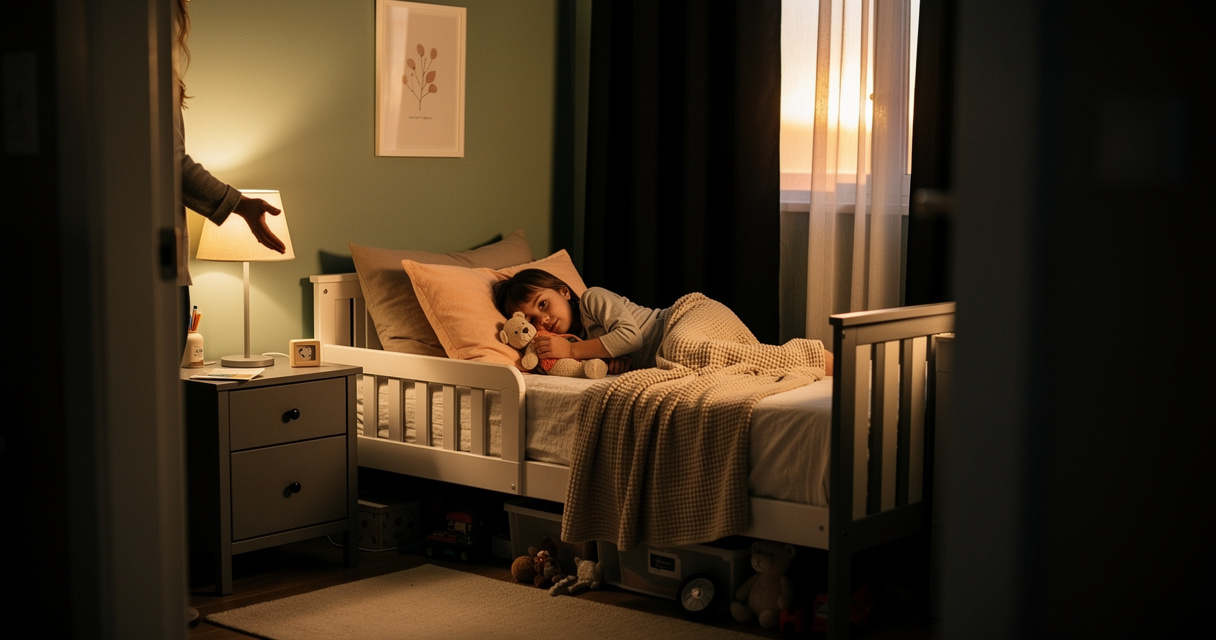
Soothe a Fussy Toddler Before Bedtime: 8 Science-Backed Tips
Your sweet toddler turns feral the moment pajamas appear. Sound familiar?
You’re not imagining it. As sleep pressure builds and the day’s stimulation piles up, even the most easygoing kids become clingy, defiant, or suspiciously energetic. The good news: small, consistent changes can lower bedtime resistance, shorten settling time, and improve overnight sleep within days.
In this guide, you’ll learn exactly why toddlers unravel at the end of the day and walk through eight practical, evidence-based strategies to make lights-out feel calm instead of chaotic.
Why Toddlers Get Fussy at Bedtime
Toddlers are wired for exploration, independence, and big feelings—especially in the evening. As the day winds down, even confident kids get clingy or hyper. That’s normal development, but chronic bedtime battles chip away at total sleep.
For 1–2 year-olds, the American Academy of Sleep Medicine recommends 11–14 hours of sleep in 24 hours. For 3–5 year-olds, 10–13 hours is typical, including naps. When toddlers regularly miss those targets, behavior and mood worsen the next day—which makes the following bedtime harder. It’s a loop many families know too well.
A consistent routine and age-appropriate timing interrupt that loop. A 2019 systematic review published in Sleep Medicine Reviews found that consistent bedtime routines are associated with longer sleep, fewer night wakings, and less bedtime resistance in young children.
The Sleep Science in Simple Terms
Think of toddler sleep like a seesaw balancing two forces:
- Homeostatic sleep pressure: The longer your child is awake, the stronger the drive to sleep. Stay up too long, and the body swings into “second wind” mode with alerting hormones—cue the zoomies.
- Circadian rhythm: The internal clock influenced by consistent schedules and light exposure. Bright evening light shifts the clock later; dim light helps it wind down.
A 2017 study in Physiological Reviews showed that these two systems interact powerfully in young children, making timing and light exposure critical levers parents can pull.
Three key facts to keep in mind:
- Most toddlers transition from two naps to one between roughly 18–24 months. Timing that single nap matters enormously for bedtime.
- Evening screen use can delay sleep through stimulating content and blue light exposure. The AAP advises avoiding screens for at least one hour before bed.
- Consistent bedtime routines can improve sleep onset within just a few days of implementation.
8 Practical Ways to Soothe a Fussy Toddler Before Bedtime
1. Guard the Clock: Time Bedtime Off the Last Nap
Aim for age-appropriate wake windows in the late afternoon. For many 1–2 year-olds, bedtime 4–5 hours after waking from the last nap works well. For older toddlers on one nap, 5–6 hours may fit better.
If your toddler melts down nightly, try moving bedtime 15–30 minutes earlier for 3–4 days and reassess.
Why it works: Aligning sleep pressure with the circadian “window” reduces cortisol-fueled restlessness. When the nap runs too late, bedtime resistance spikes. Earlier, predictable schedules help the body expect sleep.
Example: If your 20-month-old wakes from a nap at 2:00 p.m., aim for a 6:30–7:00 p.m. bedtime rather than pushing to 8:00 p.m.
2. Build a Simple, Same-Order Routine (20–30 Minutes)
Pick 3–5 calming steps you can repeat anywhere: bath, pajamas, brush teeth, two books, cuddle, lights out. Start at the same clock time most nights.
Multiple studies—including a large 2019 review in Sleep Medicine Reviews—link consistent routines to fewer bedtime battles, faster sleep onset, and better next-day behavior.
Tip: Use the same words nightly—”Last book, then song, then lights out.” Predictability lowers anxiety and gives toddlers a gentle sense of control.
3. Dim Lights and Power Down Screens 60 Minutes Before Bed
Lower household lighting and end screen time at least one hour before bedtime. A 2022 University of Colorado study found that even modest evening light exposure suppressed melatonin by up to 88% in preschoolers and delayed their circadian clock.
If you need a wind-down activity, choose tactile play, a warm bath, or quiet books instead of videos.
Why it works: Lower light signals “night” to the brain so melatonin can rise on time, making your toddler genuinely sleepy right when you need it.
4. Create a Cozy, Cue-Rich Sleep Environment
Keep the room cool (68–72°F), dim, and boring. Darken windows, reduce stray noise, and use a consistent lovey or sleep sack for positive associations.
White noise can help mask household sounds, but mind the volume and distance. A 2014 study in Pediatrics found some infant sound machines exceeded safe levels at close range. Place the device across the room and keep volume at a low, steady hum.
Why it works: Fewer sensory distractions plus consistent cues—same song, same lovey—tell your toddler’s brain “this is where we sleep,” reducing protests driven by FOMO or overstimulation.
5. Front-Load Connection and Choices
Toddlers crave autonomy. Offer two limited choices during the routine: “Striped or star pajamas?” “Book A or Book B?” Then add a predictable dose of one-on-one connection 15 minutes before the routine starts—floor play, a puzzle, or a “special time” timer.
When children feel seen and heard, they cling less at lights out.
Why it works: Choice within structure satisfies independence without derailing timing. Connection reduces protest behaviors that are often mislabeled as “manipulative” but are really bids for closeness.
6. Mind Evening Food, Drink, and Movement
Finish high-sugar snacks and large drinks 60–90 minutes before bed. Offer a light, balanced snack if dinner was early—think banana with nut butter or a small portion of cheese and crackers.
Build in daytime outdoor play and late-afternoon gross motor time, then transition to calmer activities in the last hour. A 2020 review in Sleep Medicine Reviews found that regular physical activity supports healthier sleep in young children, but vigorous play right before bed can be too activating.
Why it works: You avoid discomfort—full bladder, reflux, sugar crash—and let the nervous system settle so drowsy cues can take hold.
7. Use a Consistent, Calm Response to Last-Minute Requests
After lights out, expect “one more book,” “water,” or “I need you!” Acknowledge the feeling, restate the boundary, and offer a brief, neutral check-in: “I’ll come back to peek in after your song.”
Keep any returns boring and short—no eye contact games, no negotiations.
Why it works: Predictable, low-drama responses prevent accidental reinforcement of stalling while still meeting the need for safety and connection. Research consistently shows that routines remaining stable across nights drive the biggest improvements in toddler sleep.
8. Save Supplements for Medical Guidance Only
Avoid starting melatonin for bedtime fussiness without talking to your pediatrician first. The American Academy of Sleep Medicine issued a health advisory urging caution with melatonin in children, and CDC data show a sharp rise in pediatric emergency visits related to melatonin ingestions.
Behavioral strategies—routine, timing, environment—are the first-line approach for typical toddler sleep challenges.
Why it works: Melatonin doesn’t address the root cause of bedtime resistance. Fixing the schedule and environment creates lasting change without the risks of unregulated supplements.
Troubleshooting Common Bedtime Friction Points
The Second-Wind Toddler Who Runs Laps at 8 p.m.
Shift the nap slightly earlier for a week and bring bedtime forward by 20 minutes. Protect the last hour with dim lights, no screens, and quiet play. Research from the University of Colorado (2022) shows even minor evening light exposure can delay melatonin production in preschoolers significantly.
Example: If the nap currently ends at 3:00 p.m. and bedtime is 8:00 p.m., try capping the nap by 2:30 p.m. and starting the bedtime routine at 7:10 p.m.
Endless Requests and Door-Dashing
Build common requests into the routine itself. Say the checklist out loud: “Water, potty, cuddles, two books—done.” After lights out, use short, neutral check-ins at increasing intervals or a single “final goodnight.”
Consistency across nights—not perfection on any single night—drives change.
Night Wakings After an Easy Bedtime
Look at total daytime sleep and late naps. If the nap runs too late or too long, shift it earlier or shorten it by 15 minutes. Many 2-year-olds still need one nap, but a nap ending after 3:00 p.m. can fragment nighttime sleep.
Frequently Asked Questions
What is a realistic bedtime for a 2-year-old?
For most families, 7:00–8:00 p.m. works when the single nap ends by early afternoon. If your child wakes from the nap at 2:00 p.m., a 7:00 p.m. bedtime gives roughly a 5-hour wake window—a solid starting point. Adjust based on how quickly your child falls asleep and morning wake time.
My toddler’s routine takes 45+ minutes. Is that too long?
Probably. Routines longer than 30 minutes tend to create more opportunities for stalling and negotiation. Trim to 3–5 steps and keep the whole sequence under 25 minutes. You’ll often see faster sleep onset within the first week.
Can a toddler share a room with a sibling and still sleep well?
Yes, with some planning. Stagger bedtimes by 15–20 minutes so the first child is drowsy or asleep before the second enters. Use white noise to mask movement sounds and keep the room dark. Shared-room toddlers often adapt within 1–2 weeks if routines stay consistent.
Should we try melatonin for bedtime struggles?
Not as a first step. The AASM’s health advisory urges caution with pediatric melatonin, and CDC data show rising emergency visits from accidental ingestions. Work on routine, timing, and environment first. If struggles persist after 2–3 weeks of consistent changes, bring it up with your pediatrician.
Bringing It All Together
Bedtime fussiness is a solvable puzzle. Align your toddler’s timing, dim the environment, and run the same short routine every night. Tweak in small, steady steps and give changes 3–5 days to take hold before adjusting again.
When you need help dialing in nap timing and wake windows for your child’s age, try TinyRests to calculate an age-appropriate schedule and set tomorrow’s bedtime up for success.
Medical Disclaimer: This article is for informational purposes only and does not constitute medical advice. Always consult with your pediatrician or healthcare provider about your child’s sleep patterns and any concerns about their development or health.