How Light Regulates Your Toddler’s Sleep (And How to Use It)
Your toddler’s worst sleep enemy is probably hanging from your ceiling. Bright overhead lights in the hour before bed can slash melatonin production in preschoolers by more than 70%, according to research published in the Journal of Pineal Research. The good news? Light is also the easiest sleep lever you can pull—no gadgets, no supplements, no tears.
In this guide you’ll learn exactly how light sets your child’s internal clock, which bulbs help (and which hurt), and eight simple steps to build a light routine that supports better naps and smoother bedtimes starting tonight.
Why Light Matters More Than Any Sleep Product
Your toddler’s sleep-wake cycle runs on a 24-hour circadian clock, and light is its primary input. Bright light early in the day strengthens daytime alertness. Dim, warm light in the evening lets the brain release melatonin—the hormone that says “time for sleep.”
Even modest room-level light at night can delay that signal and push bedtime later. The CDC emphasizes aligning household lighting with the natural 24-hour day to support healthy sleep rhythms.
Here’s the simple version: light is a daily reset button for your child’s body clock. Get it right, and everything from nap timing to bedtime battles gets easier.
How Your Toddler’s Body Clock Reads Light
Think of your toddler’s circadian system like a sunflower.
- Morning: Bright light “opens” the system, anchoring wake time and boosting alertness.
- Evening: Dimness lets melatonin rise, cueing calm and sleepiness. The Sleep Foundation notes that reducing evening light is one of the most effective environmental changes parents can make.
- Blue-rich light from LEDs and screens is especially potent at suppressing melatonin. A 2022 study in Physiological Reports found that preschoolers exposed to typical room-level light before bed experienced sharp drops in melatonin—far greater than what’s seen in adults at the same brightness.
Preliminary research published in Scientific Reports (2025) suggests that color temperature matters too. Cooler, blue-leaning light suppresses melatonin more than warmer-toned light at the same brightness, even in young children.
The American Academy of Sleep Medicine recommends prioritizing healthy light habits and bedtime routines before considering melatonin supplements, which can vary in dose and purity.
8 Steps to Build a Sleep-Friendly Light Routine
1. Get Outside Within 60–90 Minutes of Wake-Up
Aim for 15–45 minutes of natural daylight soon after your toddler wakes. Morning light is the strongest signal for setting the body clock, helping anchor nap timing and an earlier, steadier bedtime.
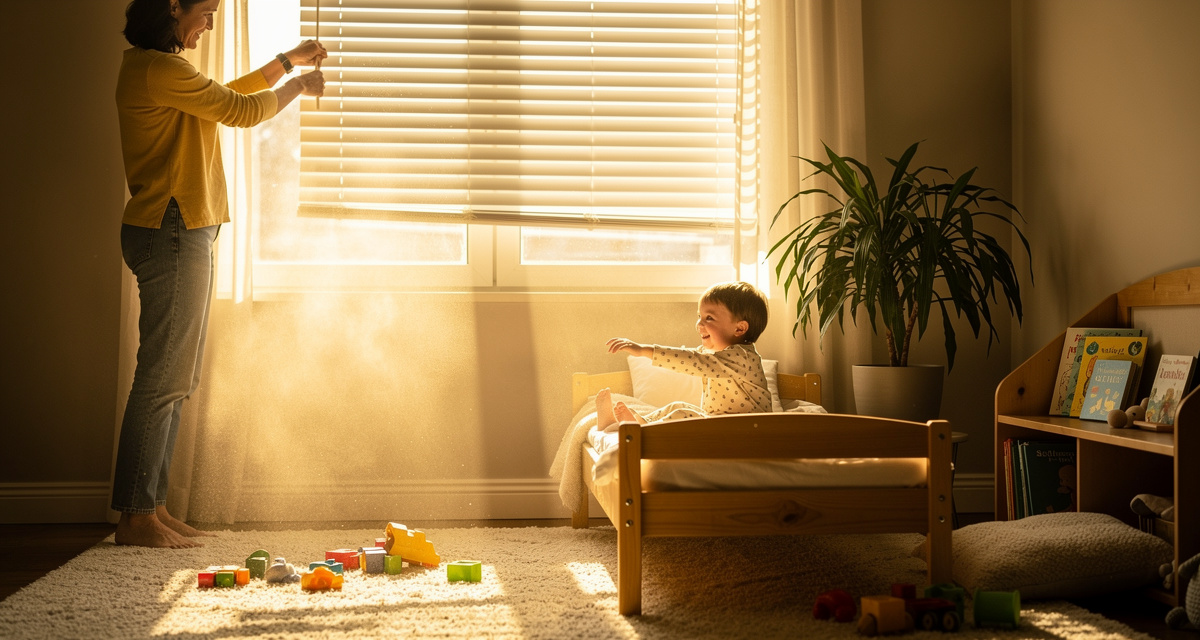
If you can’t get outside, open blinds fully and use bright, indirect indoor light during breakfast.
Why it works: Morning light advances the circadian phase—essentially telling the brain “start the day now”—which supports age-appropriate wake windows and reduces those late-evening second winds.
Example: After a 7:00 a.m. wake-up, a stroller walk from 7:45 to 8:15 a.m. gives enough bright-light exposure to help your child feel ready for a late-morning nap on schedule.
2. Dim the House 60–90 Minutes Before Bedtime
Create a predictable indoor “sunset.” Reduce overhead lights and switch to warm bulbs (around 2700K or lower). Avoid bright kitchen or bathroom lighting during this window.
Why it works: The 2022 Physiological Reports study showed that typical room-level light in the hour before bedtime strongly suppressed melatonin in preschoolers, delaying sleepy cues. Lower light lets that melatonin surge happen naturally.
Before: Overhead LEDs blazing while you rush through cleanup and baths.
After: Lamps on their lowest setting, warm night-lights, soft music, and a calm bedtime routine.
3. Make Screens a Daytime Tool, Not a Bedtime Guest
Keep TVs, tablets, and phones out of the bedroom. End screen use at least one hour before bed—earlier for sensitive sleepers.
If you allow limited media, co-view calm content in a well-lit room, then transition to books. The American Academy of Pediatrics recommends a Family Media Plan that includes keeping screens out of bedrooms and establishing screen-off times before sleep.
Why it works: Screen light and stimulating content both delay melatonin and push bedtime later. Dim, screen-free evenings support faster sleep onset.
4. Choose Sleep-Friendly Bulbs for Evening and Night
In bedrooms and hallways, use low-brightness lamps with warmer color temperatures (2200–2700K). Reserve brighter, cooler lighting for daytime spaces.
If your toddler needs a night-light, pick a very dim, warm or amber option positioned away from their eyes.
Why it works: Both brightness and spectrum matter. Preliminary research suggests warmer light reduces the “stay awake” signal compared to cooler, blue-leaning bulbs at the same intensity.
5. Use Darkness Strategically for Naps and Early Mornings
For daytime naps, create a dark, quiet space. Blackout shades prevent short naps caused by stray light.
In the early morning (4:00–6:00 a.m.), block dawn light with those same shades to reduce premature wake-ups. Then flood the room with bright light after your desired wake time.
Why it works: The circadian clock is most sensitive to light in the late night and early morning hours. Darkness preserves sleep, while bright light after wake-up anchors the day.
6. Pair Dim Light with a Consistent Bedtime Routine
Link low light to the same soothing steps every night: bath, pajamas, two books, a song, then lights out. Over time, this sequence becomes a reliable cue chain.
Why it works: The combination of dim light and repetitive routine lowers arousal and supports melatonin rise. The Sleep Foundation highlights predictable, screen-free wind-downs as a cornerstone of healthy pediatric sleep.
Example: At 6:30 p.m. you switch to lamps and start bath time. By 7:00 p.m. you’re reading in near-darkness. Your toddler’s body learns that dimness plus books equals sleep.
7. Optimize Light Before Reaching for Melatonin Supplements
Before considering supplements, talk with your child’s pediatrician. The American Academy of Sleep Medicine advises parents to consult a healthcare professional and prioritize environmental and behavioral strategies—including light management—as the first line for typical toddler sleep challenges.
Why it works: You’re addressing the root signal—light—rather than overriding the system with a supplement that may vary in dose and purity.
8. Adjust Gently After Time Changes, Travel, or Illness
Shift your child’s schedule by 15 minutes every one to two days. Combine earlier dimming in the evening with solid morning light to nudge the clock in the new direction.
Why it works: Evening darkness advances sleep pressure while morning light resets the clock to the new local day. This two-pronged approach works for daylight saving transitions, jet lag, and recovery from illness.
Example: After springing forward, dim the house 15 minutes earlier each evening and push morning outdoor time slightly earlier for three to four days until the new schedule feels natural.
What About Night-Lights and Bathroom Trips?
A very dim, warm night-light is perfectly fine—especially for safety. Keep it low and indirect.
Brief, necessary light for diaper changes or bathroom trips won’t undo overall good light hygiene. Use the dimmest, warmest option available and avoid switching on bright overheads. Research confirms it’s the combination of brightness, spectrum, and sustained timing that drives melatonin suppression, not a quick 30-second exposure.
Frequently Asked Questions
How much light is “too bright” before bedtime?
Avoid overhead fixtures and aim for cozy lamp levels in the 60–90 minutes before sleep. If you can read a book comfortably but the room feels noticeably dim compared to daytime, you’re in a good range. Even standard room lighting can significantly suppress melatonin in preschoolers, so when in doubt, go dimmer.
Do blue-blocking glasses help toddlers sleep?
There’s very little pediatric evidence supporting routine use in toddlers. Adjusting the environment—turning off screens an hour before bed, using dim warm lights, and prioritizing morning daylight—addresses both spectrum and intensity without requiring wearables your toddler probably won’t keep on anyway.
Which night-light color is best for toddler sleep?
Very dim amber or warm-toned light is ideal. Place it away from direct eye exposure and near the floor. Cooler, blue-leaning light suppresses melatonin more at the same brightness, making warm tones the better choice for preserving sleep.
How long does it take for a light routine to show results?
Most families notice improvements within three to five days of consistent morning light and evening dimming. Circadian rhythms respond relatively quickly to strong, repeated cues, though individual children may take up to two weeks to fully adjust.
The Bottom Line
Light is the most powerful everyday cue for your toddler’s body clock. Brighten the mornings, darken the evenings, and keep screens out of bedtime—and you’ll give melatonin the space it needs to do its job.
When you pair smart light habits with age-appropriate wake windows, bedtimes get smoother and naps get steadier. Ready to dial in the timing? Try TinyRests to find the right wake windows and nap schedule for your child’s age.
Medical Disclaimer: This article is for informational purposes only and does not constitute medical advice. Always consult with your pediatrician or healthcare provider about your child’s sleep patterns and any concerns about their development or health.