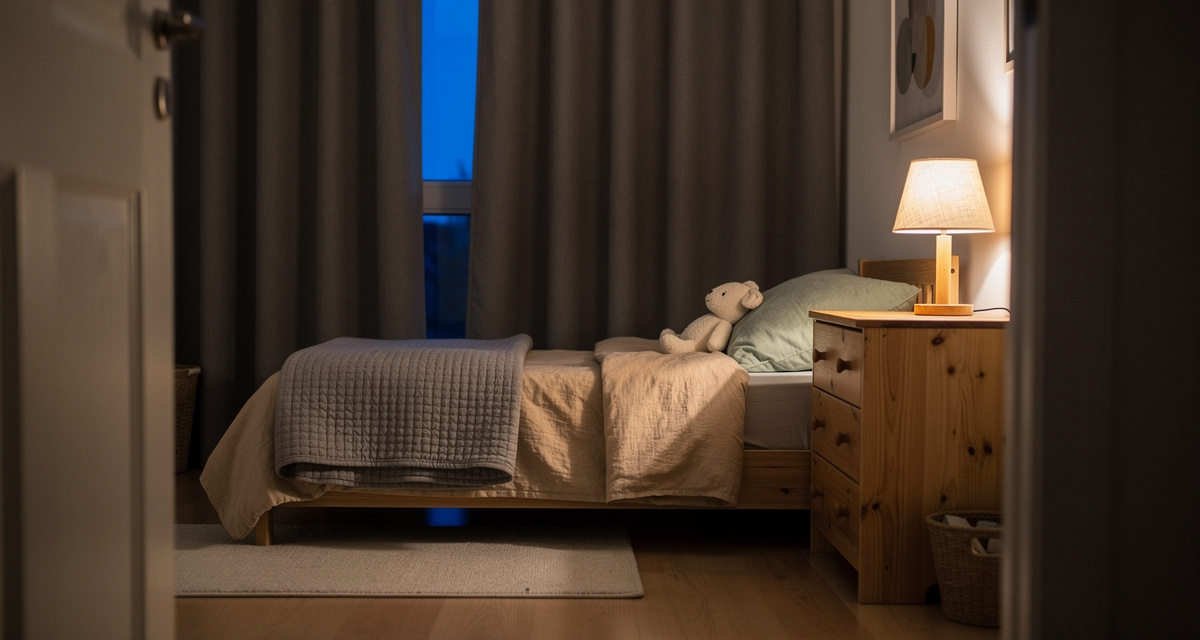
How to Create a Sleep-Conducive Environment for Toddlers (Backed by Science)
Bedtime shouldn’t feel like a hostage negotiation. Yet for parents of toddlers, that’s exactly what it becomes—the stalling, the water requests, the “one more book” that turns into five. Here’s the secret most parents miss: the room itself is half the battle.
Your toddler’s bedroom sends powerful signals to their brain. Light, sound, temperature, and routine either whisper “time to sleep” or shout “keep playing.” According to the American Academy of Sleep Medicine, toddlers need 11–14 hours of sleep per day including naps—but many fall short. The evidence is clear: dialing in the sleep environment helps toddlers fall asleep faster and stay asleep longer.
Why the Sleep Environment Matters More Than You Think
Toddlers are mastering enormous skills—walking, talking, asserting independence—and all that growth collides with sleep. You can’t control every growth spurt or regression, but you can shape the setting that tells the brain it’s time to power down.
Two biological reasons this works:
The circadian system takes cues from light. Your toddler’s internal clock relies heavily on brightness and darkness to regulate sleepiness. Research published through NIH has shown robust melatonin suppression in 3–5-year-olds after even modest evening light exposure. Their young eyes are far more sensitive to light than adult eyes.
Predictable routines lower arousal. Multiple clinical reviews, including work by sleep researcher Jodi Mindell and colleagues, show that consistent bedtime routines shorten the time it takes toddlers to fall asleep, reduce night wakings, and improve overall sleep quality.
The bottom line: a dark, quiet, comfortably cool room paired with a brief, predictable routine helps your toddler’s brain shift from play mode to sleep mode.
The Science in Simple Terms
Imagine your toddler’s sleep like a seesaw. On one side sits “awake drive”—stimulation, light, excitement. On the other sits “sleep pressure”—the biological urge to rest. The environment tips the seesaw toward sleep by:
- Dimming light so melatonin can rise naturally. Preschoolers are especially sensitive to blue-enriched and bright light in the hour before bed.
- Lowering stimulation through repetitive, calming steps that cue the nervous system to wind down.
- Masking noise spikes with steady, low-level sound that prevents sudden disruptions from fragmenting sleep.
Some key reference points parents find helpful:
- The AASM recommends 11–14 hours for ages 1–2 and 10–13 hours for ages 3–5, usually including a nap (consensus endorsed by the AAP).
- CDC analyses define “short sleep” as fewer than 11 hours for ages 1–2 and fewer than 10 hours for ages 3–5.
- The AAP encourages dimming lights before bedtime, controlling room temperature, and building a consistent routine (HealthyChildren.org).
Eight Practical Ways to Optimize Your Toddler’s Sleep Space
1. Make It Dark (But Not Scary)
Darkness supports the natural evening rise of melatonin. NIH-published research shows preschoolers’ melatonin is particularly sensitive to light in the hour before bed—bright or blue-enriched light can strongly suppress it.
Use blackout curtains and swap bright overhead lights for a warm, dim lamp about an hour before bedtime. If your child wants a nightlight, choose the dimmest warm-toned option and place it out of direct eye line.
Example:
- Before: Overhead LED stays on while changing into pajamas with a tablet nearby.
- After: Overhead off, warm bedside lamp on low, screen-free books during pajamas and story time.
2. Power Down Screens Well Before Lights Out
Screen light delays sleepiness, and screen content revs up the brain right when it needs to wind down. Both the AAP and the National Sleep Foundation emphasize device-free bedrooms and no screens in the hour before bed.
Keep TVs, tablets, and phones out of the bedroom entirely overnight. If a device must be nearby for a monitor, use “Do Not Disturb” mode with the screen face-down.
Example:
- Before: Cartoons running until teeth brushing at 7:45 PM.
- After: Screens off by 6:45 PM; quiet play, bath, and books fill the gap until 7:45 PM lights out.
3. Keep the Room Comfortably Cool
As the body prepares for sleep, core temperature naturally dips. Overheating fragments sleep and causes restlessness. The AAP advises controlling room temperature and avoiding heavy bedding or multiple layers that cause sweating (HealthyChildren.org).
Dress your toddler in breathable sleepwear and adjust layers seasonally rather than cranking the heat.
Tip: Do a quick neck or upper-back check about 15 minutes after lights out. If skin feels sweaty or damp, remove a layer.
4. Use Sound Wisely: Steady, Soft, and Distant
Consistent low-level sound can mask household noise or street sounds that wake light-sleeping toddlers. But volume and placement matter a lot.
A 2014 study in JAMA Pediatrics found that many infant and toddler sound machines can exceed recommended safe noise levels when placed near the child or set too high. Keep your machine across the room on the lowest effective volume—never right next to your child’s head.
Example:
- Before: Sound machine on the dresser inches from the crib at medium-high volume.
- After: Machine placed across the room, volume just loud enough to mask distant noise.
5. Simplify the Sleep Surface
Minimal, safe bedding reduces both distractions and hazards. After the first birthday, many toddlers transition to a small blanket or toddler pillow, but keep stuffed animals to one comforting item. Avoid piles that overheat or overstimulate.
Use a fitted sheet on a firm mattress in a crib or toddler bed that meets current safety standards, and keep the area around the bed clear of toys and clutter.
Tip: If your toddler climbs out of the crib, consider a toddler bed with guard rails—and anchor all nearby furniture to the wall.
6. Build a Five-Step Bedtime Routine (15–30 Minutes)
Routines cue the brain that sleep is next. Research by Mindell and colleagues, reviewed across multiple NIH-published studies, consistently shows that predictable bedtime sequences reduce sleep onset time and night wakings in young children.
Keep the order identical every night and end with lights out:
- Bath or warm wipe-down
- Pajamas and diaper change or toilet
- Brush teeth
- Two short books or quiet songs (screen-free)
- Lights out with a brief, calm goodnight phrase
The whole sequence should take 15–30 minutes. Longer routines tend to invite more stalling.
7. Align Timing With Biology (And Protect the Nap)
Overtired toddlers often get more wired, not sleepier. The AASM recommends 11–14 hours of total sleep at ages 1–2 and 10–13 hours at ages 3–5, usually with one daytime nap into the early preschool years.
Aim for a consistent bedtime and a nap that ends by mid-afternoon so there’s enough sleep pressure built up by evening.
Example:
- Before: Nap runs 3:30–5:30 PM; bedtime becomes a struggle until 9:30 PM.
- After: Nap shifted to 1:00–2:30 PM; lights out at 7:45 PM with a much easier settle.
8. Be Cautious With Sleep Aids (Including Melatonin)
Most toddler sleep problems respond to environment and routine changes alone. The AASM advises families to consult a healthcare professional before giving children melatonin—supplements aren’t FDA-regulated like medications and vary in actual dose.
If your pediatrician recommends melatonin, it should follow a specific plan and come after behavioral strategies are already in place.
If your child snores most nights, has labored breathing during sleep, or remains very restless despite strong routines, talk with your pediatrician to screen for underlying issues.
Putting It All Together: A Quick Evening Blueprint
60–90 minutes before bed: Turn off all screens. Dim lights throughout the home and switch to warm, low lighting in your toddler’s room.
30 minutes before bed: Start your routine—bath, pajamas, tooth brushing, two books or songs. Keep voices calm and play gentle.
At lights out: Room is dark (dim warm nightlight only if needed), comfortably cool, and either quiet or with soft white noise from across the room.
Overnight: Keep conditions consistent. If a sound machine was on at bedtime, let it run at the same low volume all night. Respond to needs calmly and briefly, then return to the same quiet, dark environment.
Frequently Asked Questions
What’s the ideal room temperature for toddler sleep?
There’s no single magic number. The AAP focuses on avoiding overheating rather than hitting an exact degree. Dress your toddler in breathable layers, adjust seasonally, and do a quick neck check after lights out—damp skin means it’s too warm.
Are red nightlights better than blue or white ones?
Research shows brighter and blue-enriched light suppresses melatonin more than dim, warm light. Choose the dimmest warm-toned nightlight you can find and position it away from your child’s eyes. The priority is low intensity, not a specific color.
Is white noise safe for toddlers all night?
Yes, when used carefully. Place the device across the room and keep volume at the lowest level that still masks disruptive sounds. Running it at a consistent level all night avoids the jarring silence that can wake a light sleeper when a timer shuts off.
My toddler dropped the nap but is exhausted by dinner. What now?
Many children between 2.5 and 4 go through a transition period. Try offering a 30–45 minute “quiet rest” in a dim room even without sleep. Move bedtime 30–60 minutes earlier during the transition to prevent an overtired meltdown. Most children adjust within a few weeks.
The Takeaway
A toddler’s best sleep environment is simpler than you think: dark, quiet, comfortably cool, and paired with a short, predictable routine. Guard the hour before bed from bright light and screens, keep sound soft and distant, and time naps so bedtime aligns with your child’s biology rather than fighting it.
Small tweaks add up fast. Most families notice improvements within a week of consistent changes. For help finding the right nap timing and wake windows for your toddler’s age, try TinyRests—so you can spend less time guessing and more time enjoying a calmer evening.
Medical Disclaimer: This article is for informational purposes only and does not constitute medical advice. Always consult with your pediatrician or healthcare provider about your child’s sleep patterns and any concerns about their development or health.