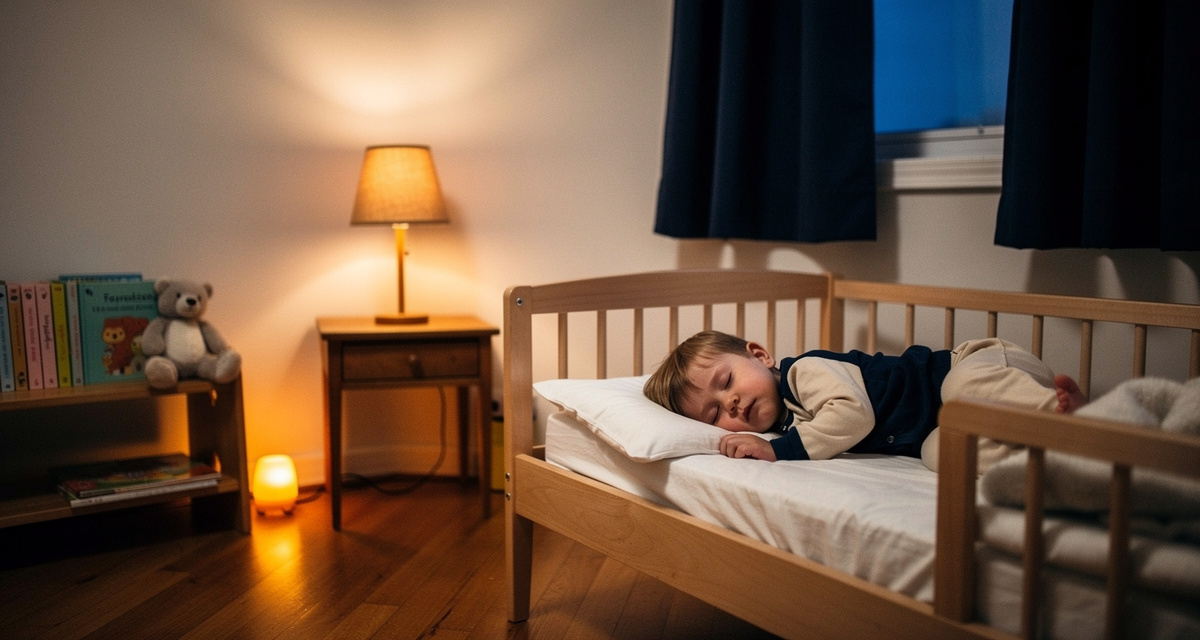
How to Use Gentle Transitions for Toddler Sleep Success
Your toddler suddenly fights bedtime like it’s a personal mission. Or naps vanish overnight, leaving you both exhausted by dinner. Sound familiar? These aren’t defiance—they’re developmental milestones colliding with sleep needs.
The truth: toddlers grow fast, and their sleep patterns shift to match. The American Academy of Sleep Medicine reports that toddlers ages 1–2 need 11–14 hours total sleep in 24 hours, while preschoolers 3–5 need 10–13 hours. When you guide these changes gently—using small timing tweaks, predictable routines, and smart light exposure—you avoid power struggles while protecting the total sleep that fuels learning, behavior, and mood.
Let’s map out exactly what’s changing, why it matters, and how to adjust smoothly.
What’s Changing (and Why It Matters)
Between 12 and 36 months, sleep architecture undergoes major shifts. Most toddlers consolidate from two naps to one around 18 months. By ages 3–5, roughly half drop regular naps entirely.
These transitions can derail overnight sleep if you don’t adjust schedules gradually. Research from Nationwide Children’s Hospital shows that preserving age-appropriate total sleep supports emotional regulation and daytime behavior.
When naps shorten or disappear, bedtime must shift earlier to compensate. When morning wake times stretch later, nap timing needs adjustment. Small, intentional changes keep sleep debt from accumulating.
Key insight: Total sleep quantity matters more than where it happens (day vs. night). Gentle transitions simply redistribute those hours as development demands.
The Sleep Science (In Parent-Speak)
Your toddler’s sleep runs on two biological systems working in tandem:
Sleep pressure (homeostatic drive): Builds while awake, releases during sleep. Longer wake windows increase pressure; naps reduce it temporarily.
Circadian rhythm (body clock): Sets the timing for sleep and wake based on environmental cues. Bright morning light locks in wake time. Dim evening light signals “sleep approaching.”
Bedtime routines: Act as powerful behavioral cues. Research published in Sleep shows that consistent routines reduce sleep onset time and night wakings in toddlers and preschoolers.
Gentle transitions work by adjusting both systems simultaneously: you shift wake/sleep timing slightly (respecting circadian rhythm) while managing wake window length (controlling sleep pressure).
Practical Strategies That Actually Work
1. Shift Timing in 10–15 Minute Increments
Move bedtime or nap start times by 10–15 minutes every 2–3 days until you reach your target. This gradual approach prevents overtiredness and bedtime battles.
If your child is wired at bedtime, shift earlier. If they chat in bed for an hour, shift slightly later.
Why it works: Tiny moves respect both sleep pressure and circadian timing without triggering a “second wind” cortisol surge.
Example: You need bedtime at 7:30 p.m., but it’s currently 8:15 p.m. Set bedtime to 8:00 p.m. for two nights, then 7:45 p.m. for two nights, then 7:30 p.m.
2. Use Light Like a Dimmer Switch
Morning: Open blinds and get outdoor exposure within 30–60 minutes of wake time.
Late afternoon/evening: Switch to warm, dim lighting. Avoid bright overhead lights.
Last hour before bed: Screen-free wind-down only. The American Academy of Pediatrics recommends ending screen time at least one hour before sleep because blue light and stimulating content delay melatonin release.
Why it works: Morning light advances the body clock (promoting earlier bedtime). Dim evening light and reduced screen time prevent melatonin suppression.
Example: After dinner, turn off overhead lights, use table lamps, and charge devices in the kitchen.
3. Lock In a 20–30 Minute Bedtime Routine
Choose 3–4 calming steps: bath, pajamas, brush teeth, read books, cuddle. Perform them in the exact same order every night.
Research shows consistent routines correlate with faster sleep onset, longer total sleep, and fewer night wakings. The AAP’s “Brush, Book, Bed” program provides a simple template.
Why it works: Repetition creates powerful sleep associations that cue the brain to wind down.
Before: A drifting 60-minute routine with extra snacks, toy requests, and negotiations.
After: Bath → pajamas → brush teeth → two short books → lights out.
4. Navigate the Two-to-One Nap Transition
Signs it’s time: Morning nap pushes afternoon nap too late (after 3 p.m.), or one nap is consistently skipped for 1–2 weeks despite good sleep environment.
Strategy: Transition to one nap starting around 12:00–12:30 p.m. Temporarily move bedtime 30–60 minutes earlier while stamina builds. Most toddlers complete this shift by 18 months.
Why it works: A single well-timed nap balances sleep pressure so bedtime remains stable.
Example: Your 16-month-old skips the afternoon nap 5 days per week. Offer one nap at 12:15 p.m. and move bedtime to 6:45 p.m. for one week, then gradually to 7:00 p.m.
5. Replace Fading Naps With Quiet Time
Preschoolers need 10–13 hours in 24 hours. When naps start interfering with bedtime (child awake past 9 p.m.), replace nap time with 30–45 minutes of quiet time: books, puzzles, soft music in a dimmed room.
Move bedtime earlier to compensate. About half of 3-year-olds no longer nap regularly, according to the American Academy of Family Physicians.
Why it works: Quiet time prevents overtiredness without sabotaging nighttime sleep.
Example: Your 3-year-old stays awake until 9:30 p.m. after a 2:30–4:00 p.m. nap. Implement quiet time after lunch and a 7:15 p.m. bedtime.
6. Smooth Daycare and Travel Disruptions
Daycare: Ask about nap timing and room darkness. If daycare naps run late, compensate with an earlier bedtime on those days.
Travel/time zones: For 1–2 hour shifts, adjust schedule by 15 minutes per day before departure. For larger shifts, anchor with local morning light immediately upon arrival and maintain consistent routines.
Why it works: Consistent anchors (wake time, light exposure, routine) help the circadian system realign faster.
Example: Vacation shifts bedtime 45 minutes later. Upon return, dim evening lights and move bedtime 15 minutes earlier every two nights.
7. Optimize Sleep Environment: Cool, Dark, Quiet
Set room temperature to 65–70°F. Use blackout shades. Add consistent white noise if helpful. Keep nightlights dim and warm-toned.
Pediatric sleep centers note that cool, dark environments reduce arousal and support melatonin production.
Why it works: Environment reinforces circadian cues and minimizes sleep disruptions.
Example: Install blackout curtains, add a white noise machine, and move active play to earlier in the evening.
8. Maintain Connection, Reduce Sleep Associations
Offer cuddles, songs, and stories during the routine, but aim for your toddler to fall asleep in their own sleep space. This reduces overnight awakenings tied to specific conditions (rocking, nursing to sleep).
Gentle reassurance after lights-out is fine—keep it brief and consistent.
Why it works: Toddlers who fall asleep independently are better able to link sleep cycles overnight without parental intervention.
Putting It Together: Sample Transition Plan
- Pick one anchor: Hold wake time steady within ±15 minutes for one week.
- Add routine: Implement a 20–30 minute sequence in the same order nightly.
- Adjust timing: Shift nap or bedtime by 10–15 minutes every 2–3 days toward your goal.
- Manage light: Get bright morning exposure and dim evening lights daily. Make the last hour screen-free.
- Monitor and adjust: If behavior deteriorates (meltdowns, early waking), add sleep by moving bedtime earlier for 3–4 nights, then reassess.
Red Flags: When to Call Your Pediatrician
- Loud, habitual snoring, gasping, or very restless sleep
- Persistent insomnia despite consistent routine and environment
- Daytime sleepiness affecting safety or development
- Schedule problems that don’t improve within 2–3 weeks of intervention
These may signal medical issues like obstructive sleep apnea or iron deficiency that require clinical evaluation. Mayo Clinic and pediatric sleep programs recommend discussing persistent sleep problems with your child’s doctor.
Frequently Asked Questions
How long does a gentle transition usually take?
Most families see meaningful progress within 1–2 weeks when adjusting schedules by 10–15 minutes every few days. Transitions involving time zone changes or nap consolidation may take 2–3 weeks for the circadian system to fully stabilize.
Is bedtime fading safe for toddlers?
Yes. Bedtime fading—temporarily starting bedtime closer to natural sleep onset, then gradually moving it earlier—is a behavioral technique used in pediatric sleep clinics. Combine it with consistent routines and an optimized sleep environment for best results. Consult your pediatrician if difficulties persist.
Should I use melatonin to speed schedule changes?
For healthy toddlers, behavioral strategies should be your first approach: light management, fixed wake times, and consistent routines. Professional medical organizations caution that melatonin supplements can have side effects and should only be used under physician guidance for specific conditions.
Do screens really affect toddler sleep?
Yes. Evening screen use is associated with later bedtimes and reduced total sleep in children. The AAP and National Sleep Foundation recommend making the last hour before bed screen-free and charging devices outside the bedroom.
The Bottom Line
Gentle transitions succeed because they respect biology. Small timing adjustments, reliable routines, and strategic light exposure work with your toddler’s developing circadian system—not against it.
Protect total sleep. Maintain one consistent routine. Move gradually. When you need help calculating age-appropriate wake windows for your toddler, use TinyRests to find the right nap timing for their development.
Medical Disclaimer: This article is for informational purposes only and does not constitute medical advice. Always consult with your pediatrician or healthcare provider about your child’s sleep patterns and any concerns about their development or health.